

Navigating the Maze: A Complete Guide to Student Loans Debt Collection
Managing finances while pursuing a degree is hard enough, but when the bills start piling up, the pressure can feel overwhelming. If you are a student in the USA, understanding how student loans debt collection works is not just a luxury—it is a necessity for your financial survival.
Many students fall into the trap of ignoring their mail or phone calls because they are scared of what they might find. However, knowledge is power. By understanding the process, your rights, and the available solutions, you can take control of your future.
Understanding the Basics of Student Loans Debt Collection
The world of student debt is complex. Unlike a car loan or a credit card, student loans have very specific rules, especially when it comes to the student loans debt collection process. Whether you have federal or private loans, the way lenders come after their money differs significantly.
What Happens When You Miss a Payment?
The moment you miss a payment, your loan enters “delinquency.” This is the first stage. If you continue to miss payments for a long period (usually 270 days for federal loans), you enter “default.” This is where the real trouble begins, as the student loans debt collection agencies get involved.
The Role of Collection Agencies
When a loan defaults, the original lender often sells the debt or hires a third-party agency. These agencies are professional at student loans debt collection. Their job is to get you to pay, but they must follow strict federal laws while doing so.
Your Rights Under the Fair Debt Collection Practices Act (FDCPA)
Even if you owe money, you have rights. In the USA, debt collectors cannot just do whatever they want. They are governed by the FDCPA, which protects you from harassment during the student loans debt collection cycle.
-
No Harassment: They cannot threaten you with violence or use profane language.
-
Time Restrictions: They can only call you between 8:00 AM and 9:00 PM.
-
Verification: You have the right to ask for proof that you actually owe the debt.
-
Cease and Desist: You can request in writing that they stop contacting you (though this doesn’t make the debt go away).
Federal vs. Private Student Loans: The Collection Difference
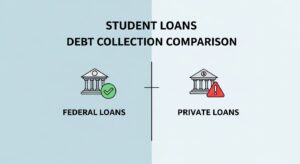
The consequences of student loans debt collection depend heavily on what kind of loan you have.
| Feature | Federal Student Loans | Private Student Loans |
| Default Timeline | Usually 270 days | Can be as short as 30-90 days |
| Wage Garnishment | Can happen without a court order | Requires a court order/lawsuit |
| Tax Refund Offset | Yes, they can take your refund | No |
| Collection Fees | Up to 17.92% of the total | Varies by contract |
For more academic resources and study guides, you can check out Ainotes.pk, which helps students stay organized.
How to Stop Student Loans Debt Collection

If you are already being contacted by collectors, don’t panic. There are several ways to stop the student loans debt collection process and get back on track.
1. Loan Rehabilitation
This is a one-time opportunity for federal loans. You agree to make nine affordable, on-time payments over ten months. Once completed, the default is removed from your credit history.
2. Loan Consolidation
You can combine multiple federal loans into one new loan. This allows you to pay off the old defaulted loans and start fresh with a new repayment plan. It is a very effective way to end student loans debt collection quickly.
3. Income-Driven Repayment (IDR) Plans
In the USA, the government offers plans where your monthly payment is based on how much you earn, not how much you owe. If your income is low, your payment could be as low as $0.
The Consequences of Ignoring Collectors
Ignoring the student loans debt collection process is the worst thing you can do. The government and private lenders have powerful tools to get their money back.
-
Credit Score Damage: A default stays on your credit report for years, making it impossible to buy a car or rent an apartment.
-
Wage Garnishment: They can take a portion of your paycheck before it even reaches your bank account.
-
Treasury Offset: The government can take your federal tax refunds or Social Security benefits.
-
Legal Action: Private lenders can sue you in court to seize assets.
For more information on how financial regulations work in the US, you can visit the Official US Treasury Site.
Strategic Steps to Take Today
If you are worried about student loans debt collection, follow these steps immediately:
-
Find Your Loans: Log into the Federal Student Aid website to see exactly what you owe.
-
Contact Your Servicer: Don’t wait for them to call you. Explain your financial situation.
-
Document Everything: Keep a log of every phone call and save every letter related to student loans debt collection.
-
Consult a Professional: If things get too complicated, look for a student loan lawyer or a certified credit counselor.
Frequently Asked Questions (FAQs)
1. Can I go to jail for not paying student loans?
No. In the USA, you cannot be arrested or sent to jail for failing to pay your student debt. Student loans debt collection is a civil matter, not a criminal one.
2. How long does it take for a student loan to go to collections?
For federal loans, it usually takes 270 days of missed payments. For private loans, it can happen much faster, sometimes after just 3 payments.
3. Can debt collectors call my parents or boss?
They can call to find your contact information, but they cannot discuss your student loans debt collection details with anyone other than you or your lawyer.
4. Will my debt ever disappear?
Unlike other debts, student loans are very difficult to discharge in bankruptcy. However, federal loans do have a “Statute of Limitations” in some contexts, but generally, the government can pursue student loans debt collection indefinitely.
5. How much can they garnish from my wages?
For federal loans, the Department of Education can take up to 15% of your disposable pay. Private lenders must sue you first to garnish wages.
6. Can I negotiate a settlement?
Yes, it is possible to negotiate a “lump sum” settlement to end student loans debt collection, but this usually requires having a large amount of cash available at once.
7. Does the 10-year repayment plan prevent collections?
As long as you are making your scheduled payments on time, you will never have to worry about student loans debt collection.
8. What is a “Validation Letter”?
It is a document you send to the collector within 30 days of their first contact, asking for legal proof that you owe the money.
9. Can I use a credit card to pay off student debt?
It is generally not recommended, as credit card interest rates are usually much higher than those involved in student loans debt collection fees.
10. Where can I get free help?
Organizations like the National Consumer Law Center provide great resources for students dealing with student loans debt collection.
Conclusion
Dealing with student loans debt collection is stressful, but it is a hurdle you can clear. By staying proactive, knowing your rights under US law, and utilizing programs like rehabilitation or IDR plans, you can protect your financial future. Remember, the goal of these agencies is to get paid; your goal is to pay in a way that doesn’t ruin your life.
Stay focused on your studies, use sites like Ainotes.pk to keep your academic life on track, and handle your debt one step at a time.